Aug 2026: Invited Talks by QoL Lab visitors
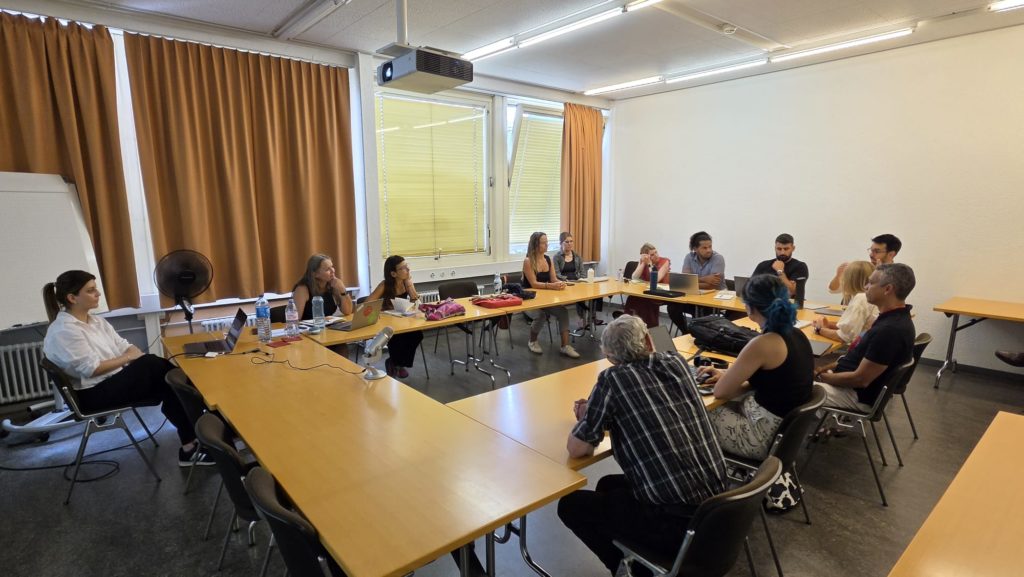
25 August 2026 at 15.00, The in-person and online talks are given by MSc Aishah Shah, Tallinn University (Estonia) and Prof Clauirton de Albuquerque Siebra, Federal University of Paraiba (Brazil) as below.
The talks will take place on Tuesday, 25 August 2026 15.00-17.00 (max) at the University of Geneva campus building Battelle A, room 432, and will be also streamed on zoom (the recording is unfortunately available due to some technical issues, please see the slides below).
MSc Aishah Shah, Tallinn University, Estonia, visiting QoL Lab from 25 August till 1 September 2026
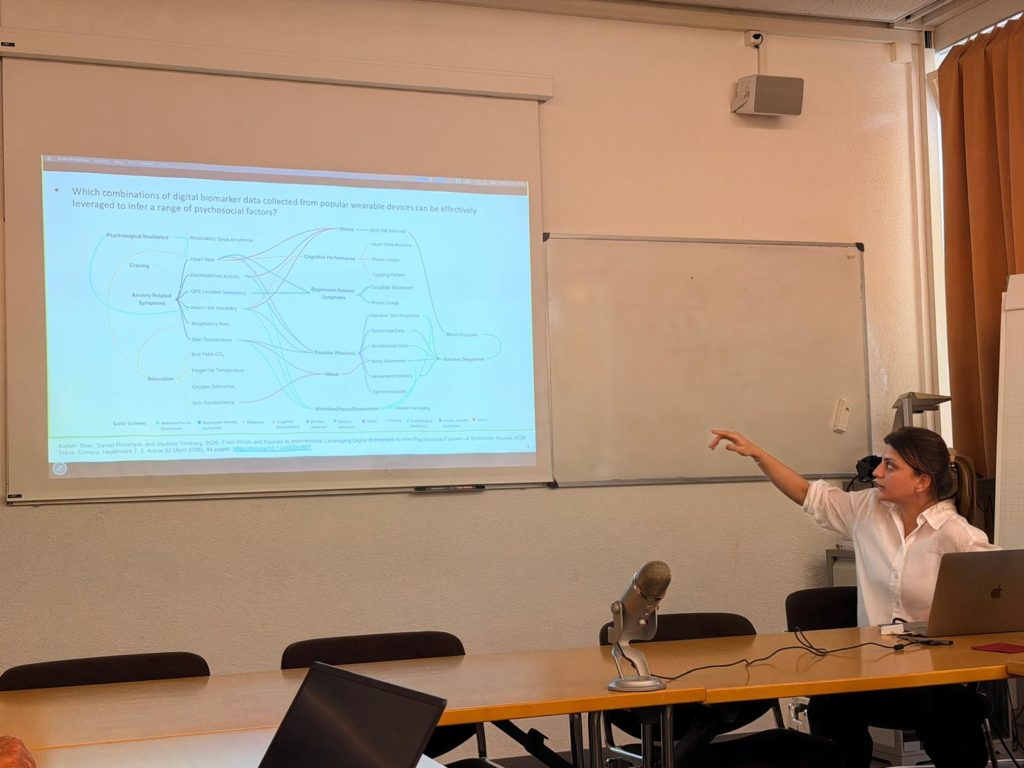
TITLE Enhancing User Models with Digital Biomarkers for Adaptive Decision Support Systems
ABSTRACT
Supporting health behaviour change through Just-in-Time Adaptive Interventions, which provide personalised support at opportune moments, requires more than monitoring physiological signals or responding to isolated events. Behaviour change is a dynamic process, yet many existing digital health systems rely on static assessments or single time-point measurements that fail to capture how people’s behavioural and psychosocial states evolve. My work explores how digital biomarkers from wearable devices and smartphones can enrich computational user models that better represent these longitudinal changes and support adaptive decision-making.
The first part of this talk explores how combinations of digital biomarkers can be used to infer psychosocial states relevant to health behaviour change, such as stress, recovery, resilience, and anxiety. The second part focuses on how these inferred states can be translated into dynamic user models that capture temporal progression, behavioural patterns, and Need–Opportunity–Receptivity (NOR) windows. These representations enable adaptive systems to determine not only what type of support may be appropriate, but also when it is most likely to be effective.
The final part addresses the validation of these computational user models. I will discuss how biomarker-derived psychosocial states can be evaluated against subjective self-reports, how their correspondence with subjective experience can be examined over time, and how longitudinal validation can strengthen confidence in their use within adaptive decision support systems. Together, these stages form a pipeline that progresses from passive sensing to validated user models capable of supporting adaptive decision making for health behaviour change.
TALK SLIDES MSc Aishah Shah 25 aug 2026
Prof Clauirton de Albuquerque Siebra, Federal University of Paraiba, Brazil, visiting QoL Lab from 1 August till 30 September 2026
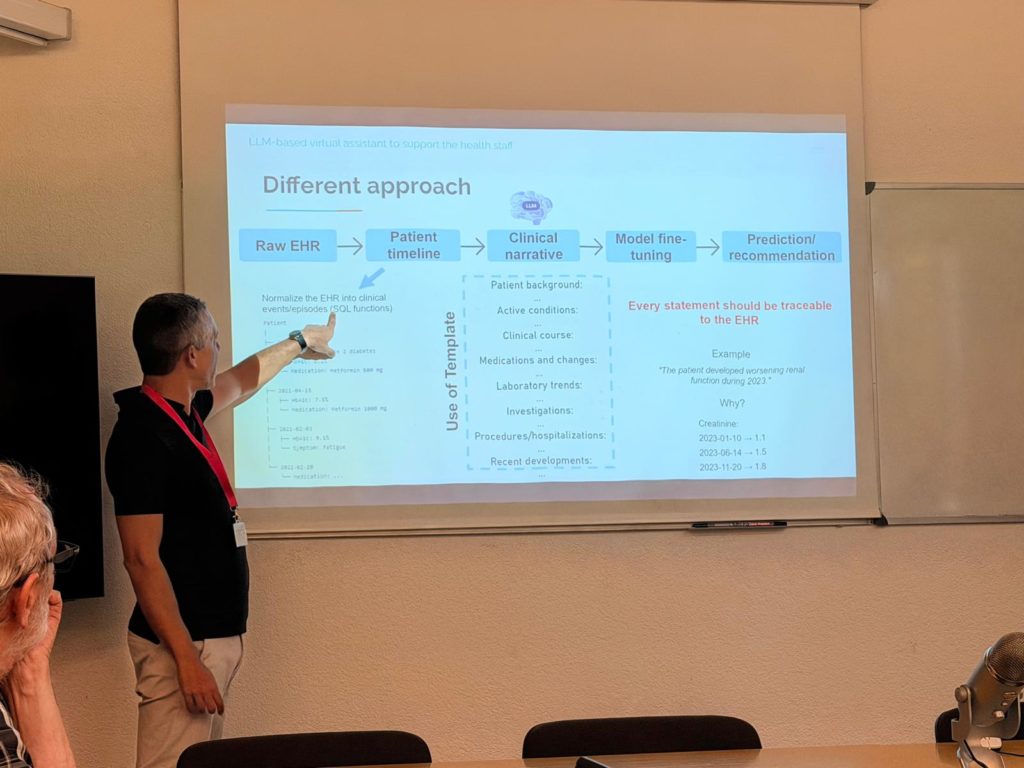
TITLE AI in Action: Real-World Applications in the Brazilian Public Health System
ABSTRACT
Artificial intelligence is becoming an essential tool for improving healthcare delivery and medical support. This talk presents four real-world AI projects currently being developed within the Brazilian Public Health System (SUS). The first project uses AI to extract clinical information from physician–patient conversations and automatically populate electronic health records. The second applies predictive models to identify patients at increased risk of cardiac events, supporting the prioritization and scheduling of clinical visits. The third focuses on the early prediction of critical clinical events, such as sepsis, to enable timely interventions. Finally, the talk explores the use of large language model (LLM)-based virtual tutors to support healthcare professionals through personalized learning experiences. Each project presents its own opportunities and challenges, which will be explored throughout the presentation.
TALK SLIDES Prof Clauirton de Albuquerque Siebra 25 aug 2026